Challenge: Discord
Goal: Analyze a forensic disk image (final.ad1), reverse-engineer a custom encryption executable, and decrypt the victim’s cached Discord images to retrieve the flag.
Flag:
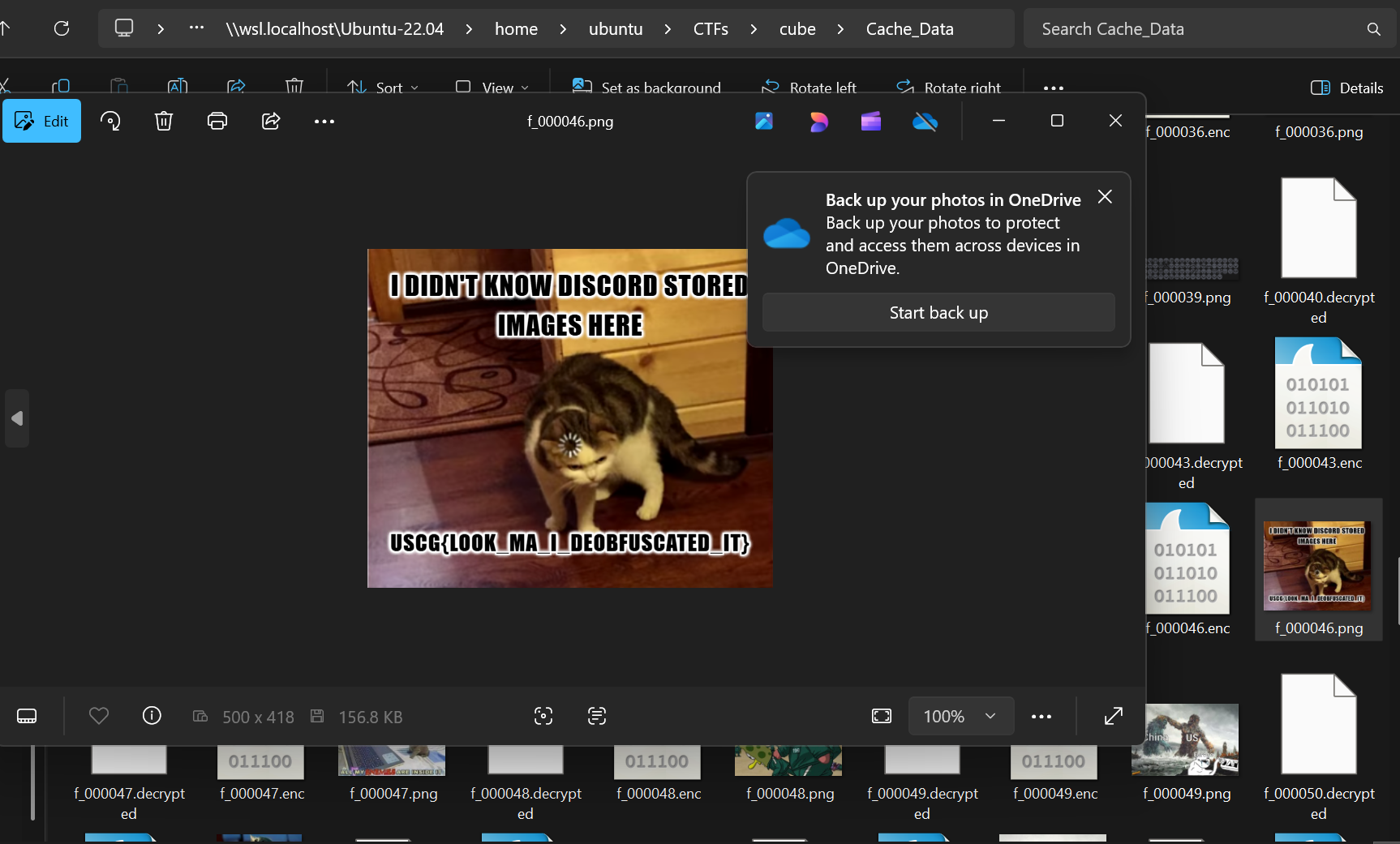
- Flag retrieved from decrypted Discord cache image.
Vulnerability & Forensic Evidence
The forensic artifact provided is an AccessData image (final.ad1). Opening the image in FTK Imager allows extracting the entire directory structure:
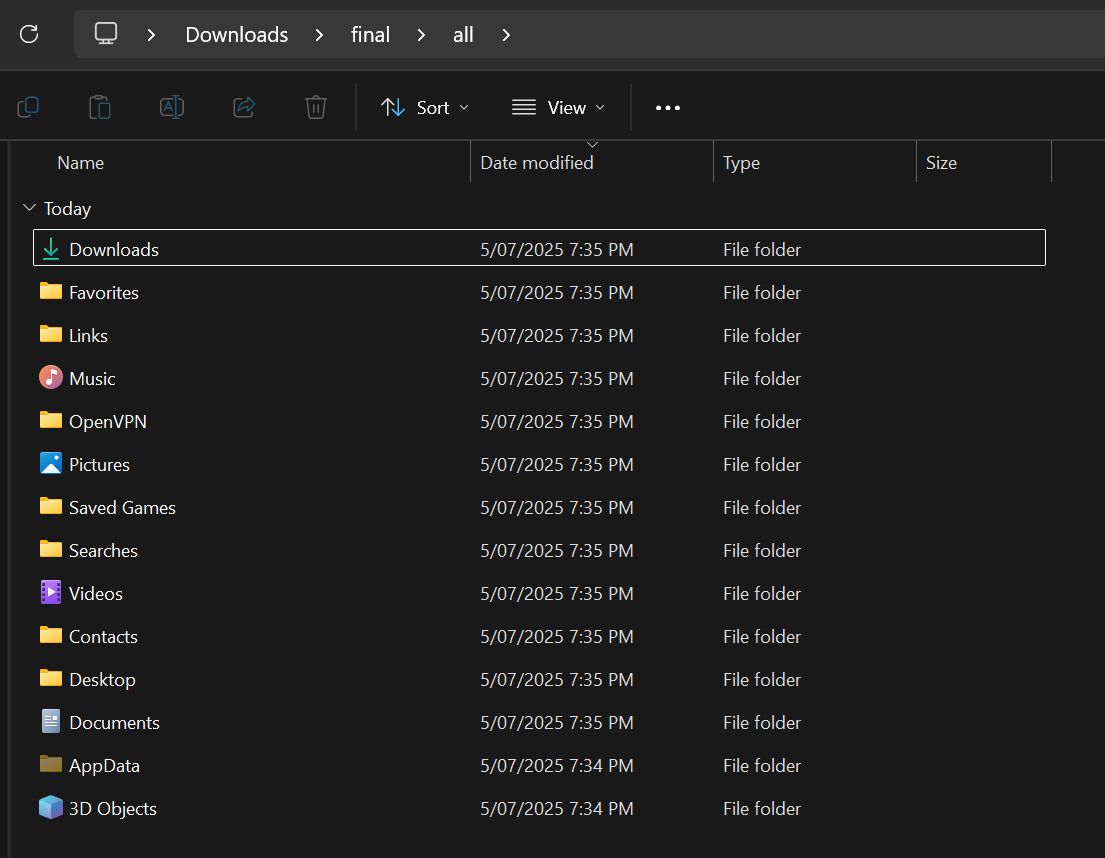
Two anomalies are immediately evident:
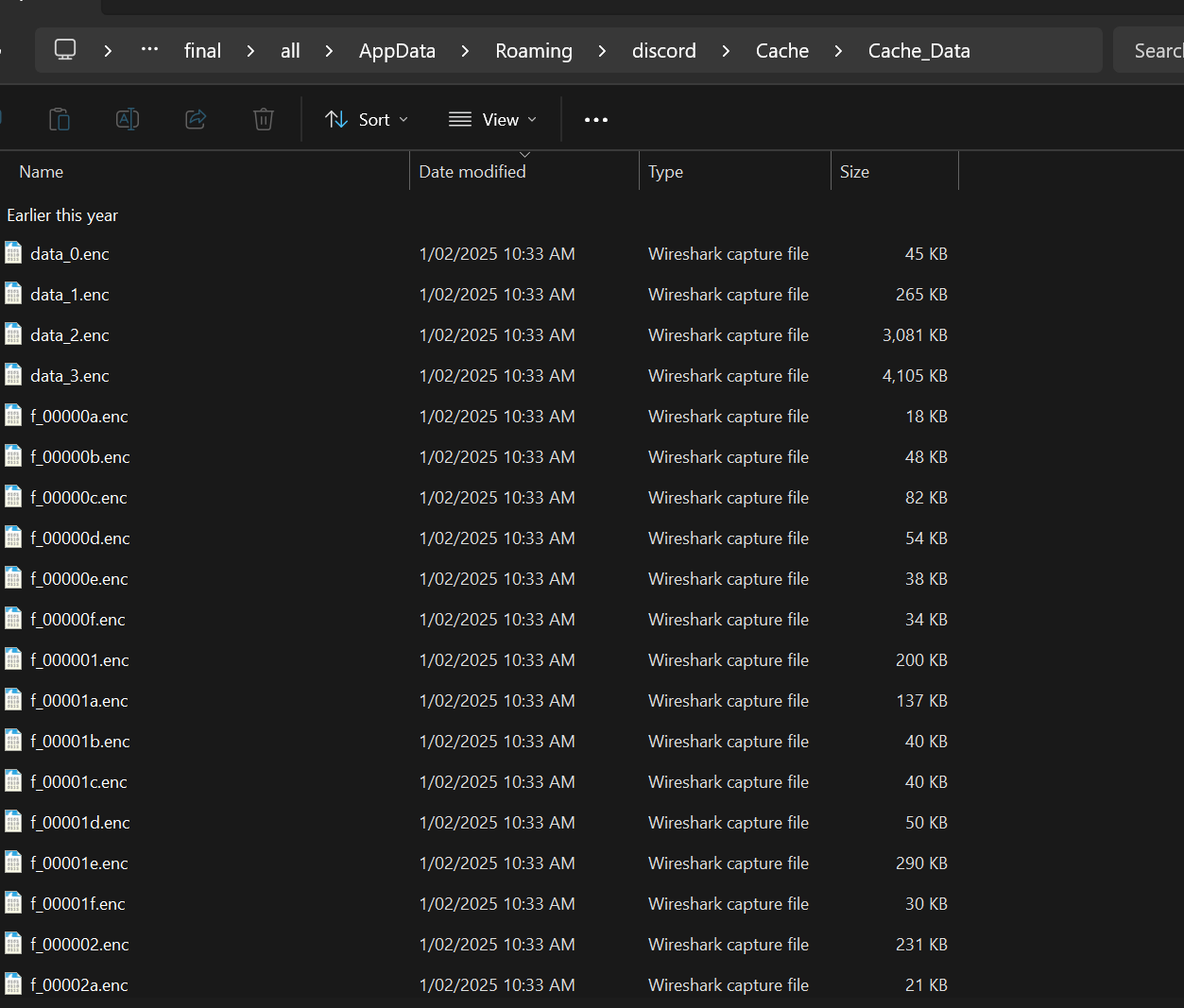
- Encrypted Cache Files: In Discord’s local cache directory (
%APPDATA%\discord\Cache\Cache_Data), files that should be standard PNG/JPEG image assets instead have a.encfile extension:
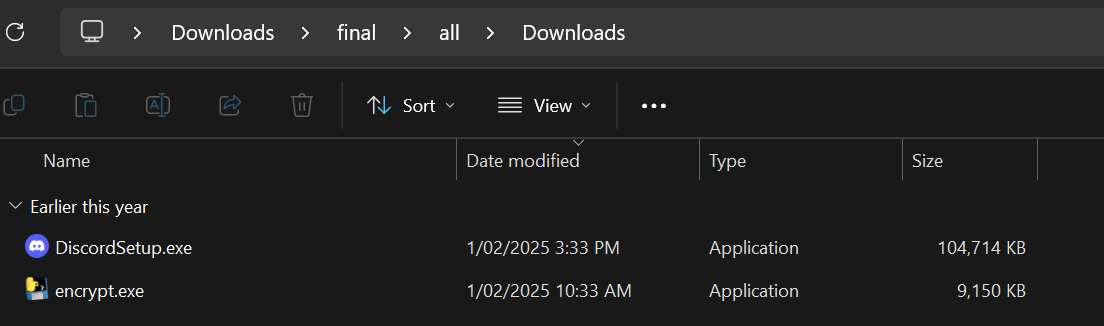
- Suspicious Binaries in Downloads: The
Downloadsfolder contains two executable files:DiscordSetup.exeand a standalone file encryption tool:
Attack Path
1. Reverse-Engineer the Encryptor Executable
Running strings on the encryption executable shows internal references to python3.dll and PyInstaller archive headers, identifying it as a compiled Python binary:
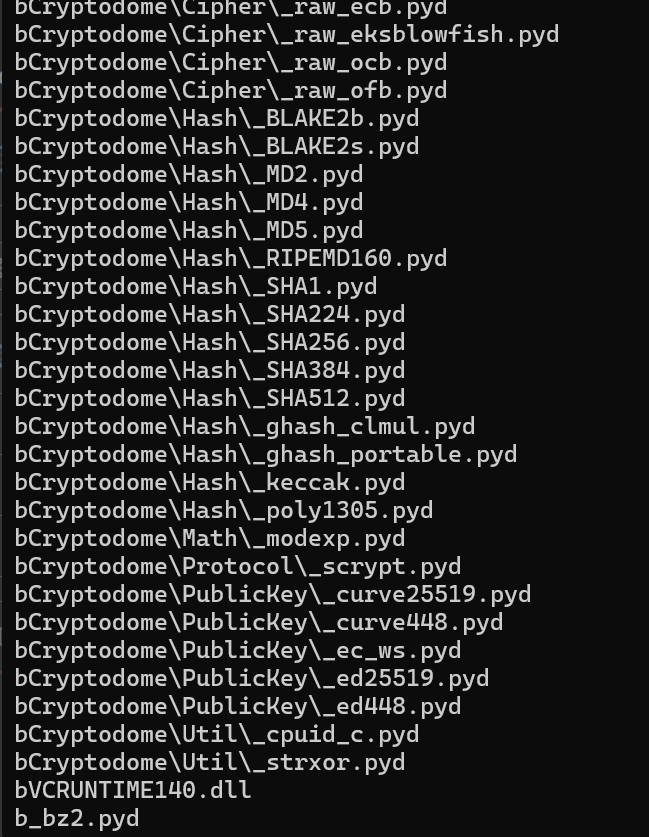
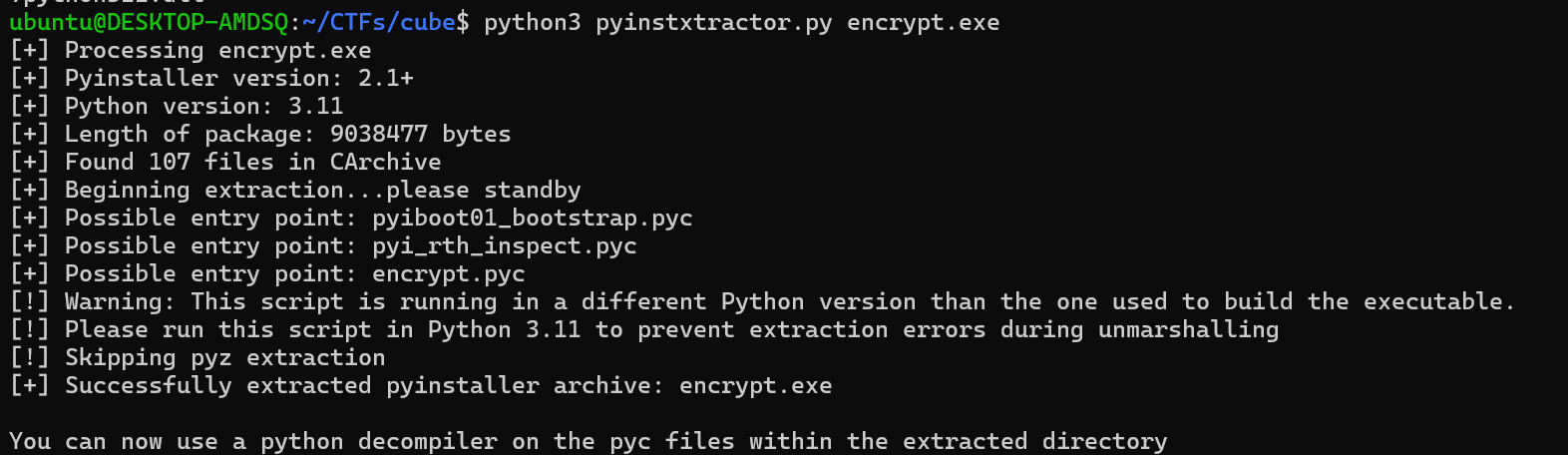
We use pyinstxtractor to unpack the PyInstaller archive and extract the compiled Python bytecode:
Decompiling the resulting encrypt.pyc using an online Python bytecode decompiler exposes the exact cryptographic routine:
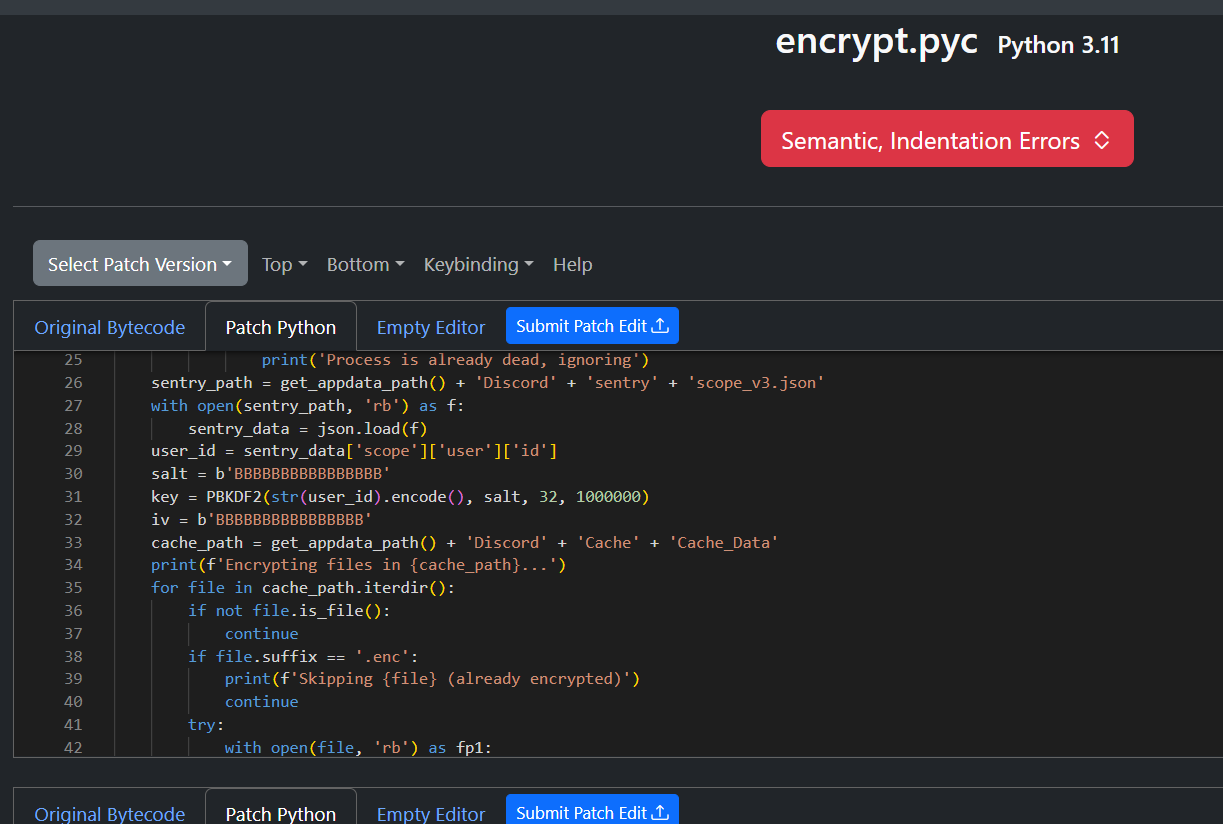
The encryption scheme functions as follows:
- Algorithm: AES-256 in CBC mode.
- Key Derivation: PBKDF2 applied to the victim’s Discord User ID.
- Salt:
b'BBBBBBBBBBBBBBBB'(16 bytes). - Iterations: 1,000,000.
- Key Length: 32 bytes (256 bits).
- IV:
b'BBBBBBBBBBBBBBBB'.
2. Retrieve the Discord User ID
To derive the correct key, we need the target’s Discord User ID (Snowflake).
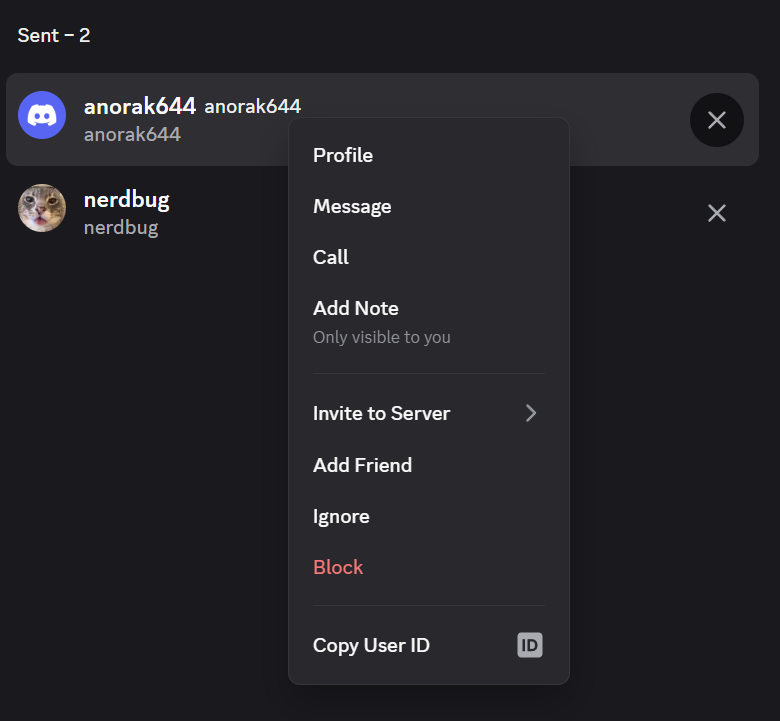
Examining the DiscordSetup.exe download and local configuration files reveals the user’s Discord handle:
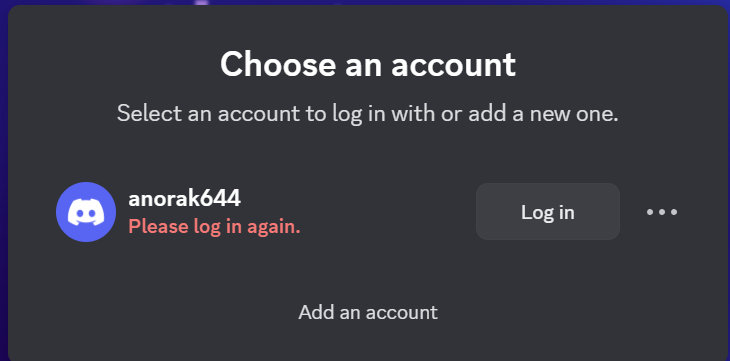
Querying or looking up this Discord handle retrieves their 18-digit Snowflake User ID: 1334198101459861555:
3. Decrypt the Cached Images
Using pycryptodome, we write a Python decryption script that derives the key via PBKDF2 and decrypts all .enc files back to PNG images:
from Crypto.Cipher import AES
from Crypto.Protocol.KDF import PBKDF2
from Crypto.Util.Padding import unpad
import os

user_id = "1334198101459861555"
salt = b'BBBBBBBBBBBBBBBB'
key = PBKDF2(user_id.encode(), salt, 32, 1000000)
iv = b'BBBBBBBBBBBBBBBB'

for filename in os.listdir('.'):
    if filename.endswith('.enc'):
        with open(filename, 'rb') as f:
            ciphertext = f.read()
        cipher = AES.new(key, AES.MODE_CBC, iv)
        try:
            plaintext = unpad(cipher.decrypt(ciphertext), 16)
        except ValueError as e:
            print(f"Error decrypting {filename}: {e}")
            continue
        output_name = filename.replace('.enc', '.png')
        with open(output_name, 'wb') as f:
            f.write(plaintext)
        print(f"Decrypted {filename} -> {output_name}")

print("All decryption complete.")
4. Recover the Flag
Opening the decrypted image files reveals the secret image containing the challenge flag:
Notes
- PyInstaller executables are easily reversed using
pyinstxtractorand bytecode decompilers (decompyle++,pycdc). - Deriving encryption keys from predictable or publicly queryable identifiers (like Discord IDs) with static salts provides no real confidentiality against forensic analysis.